Biggest Acer Aspire Go 15 Buying Mistakes (And How to Avoid Them)
Introduction
The Acer Aspire Go 15 positions itself as a versatile 15-inch laptop aimed at everyday productivity, light content creation, and general-purpose use. For buyers who need a larger screen without the bulk of a desktop replacement, it can seem like a safe choice. Yet, like any mainstream product line with multiple configurations, a few common purchasing mistakes can leave owners disappointed—sometimes immediately, sometimes months down the line.
This article walks through the most frequent mistakes people make when buying an Acer Aspire Go 15 and explains how to avoid them. The advice focuses on real-world use cases—students, remote workers, frequent travelers, creative hobbyists, and casual gamers—and highlights the details buyers typically care about: performance, battery life, screen quality, ports, upgradeability, and long-term reliability.
Detailed Product Analysis and Review
Before listing specific mistakes, it helps to understand what the Aspire Go 15 generally offers and where its strengths and limitations fall in practical use.
Design and Portability
The Aspire Go 15 typically aims for a balance between a roomy 15.6-inch display and a chassis that remains portable enough for daily commuting. The larger screen benefits multitasking—multiple windows, spreadsheets, or split-screen video editing—but buyers should be mindful of weight and thickness if they intend to carry it for long periods. Compared to 13-inch ultraportables, it sacrifices some pocketability for usable screen real estate.
Performance and Configuration Options
Configurations span from energy-efficient processors with integrated graphics to mid-range CPUs paired with entry-level discrete GPUs. For general productivity—email, document editing, web browsing—integrated graphics and a midrange CPU are perfectly adequate. For photo editing or heavier multitasking, buyers should prioritize higher RAM and an SSD with ample capacity.
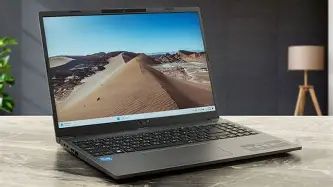
Key point: The same model name may include very different internal components. Two Aspire Go 15 laptops can feel worlds apart if one has 8 GB of RAM and a small SSD while another has 16 GB and a larger SSD.
Display Options and Real-World Impact
Display choices often range from basic 1080p panels to higher-resolution, color-accurate options on some SKUs. A bright, high-quality screen matters for content creators and anyone working long hours. For budget-oriented users who mostly browse and write, a standard 1080p IPS panel will usually suffice. Buyers who plan to edit photos or videos should seek out higher color gamut coverage and higher resolution panels.
Thermals and Battery Life
Thermal design affects sustained performance: thin 15-inch laptops can heat up under continuous workloads and throttle CPU/GPU performance. Battery life varies widely with configuration and usage patterns—light web browsing and document work can yield several hours, while streaming, gaming, or video editing will drain the battery quickly.
Upgradeability and Serviceability
Some Aspire Go 15 configurations offer accessible RAM and storage slots, while others have soldered components that limit future upgrades. Buyers who plan to keep a laptop for several years should prioritize models with upgradeable RAM and an extra M.2 slot or a larger factory SSD.
Biggest Buying Mistakes and How to Avoid Them
Mistake 1: Choosing a SKU Based Only on Price
Why it happens: The Aspire Go 15 line includes many SKUs priced closely together. Buyers often pick the cheapest option without checking the configuration details.
Consequence: A low-priced model may come with only 8 GB of RAM, a small 256 GB SSD, and a baseline CPU that struggles with modern multitasking needs, resulting in sluggish performance within months.
How to avoid it: Always compare CPU model, RAM, storage type (NVMe vs SATA), and display spec. Prioritize 16 GB of RAM for longevity, an NVMe SSD for responsiveness, and a CPU appropriate to intended tasks. If the cheapest SKU fits the budget, plan for an immediate upgrade path—confirm whether the RAM or SSD can be upgraded later.
Mistake 2: Underestimating Display Needs
Why it happens: Buyers assume a 15-inch screen is “big enough” and overlook panel quality, brightness, and color accuracy.
Consequence: Poor color accuracy or low brightness leads to eye strain and disappointment for photo/video work, and makes outdoor use difficult.
How to avoid it: Decide how the laptop will be used. For media creation, require at least a 100% sRGB or equivalent panel and higher resolution. For general productivity, confirm a matte finish and 250+ nits brightness for comfortable indoor use. If color fidelity matters, test or seek exact color gamut specs before purchasing.
Mistake 3: Ignoring RAM and Storage Upgrade Limitations
Why it happens: Many buyers do not check whether RAM is soldered or if there’s a spare M.2 slot for storage.
Shop the latest Laptops & Computers picks on Amazon.
View Offers →Consequence: A machine with soldered 8 GB RAM and a single small SSD becomes non-upgradeable, forcing a full replacement much sooner.
How to avoid it: Look up the service manual or teardown information, or verify vendor documentation for upgradeability. Prefer SKUs with at least one user-accessible RAM slot and an additional M.2 slot if possible. If buying a model with soldered RAM, buy a higher-RAM SKU from the outset.
Mistake 4: Expecting Gaming-Grade Performance from Integrated or Entry GPUs
Why it happens: Marketing language sometimes emphasizes “graphics” without clarifying capability.
Consequence: Casual gamers expecting high frame rates in modern titles may be disappointed; some AAA games will only run at low settings or unplayable frame rates.
How to avoid it: Match expectations to reality. For light gaming or older titles, integrated graphics or low-end discrete GPUs are fine. For modern gaming at high settings, choose a configuration with a capable discrete GPU and ensure thermal headroom. Otherwise, consider a dedicated gaming laptop instead.
Mistake 5: Neglecting I/O and Port Needs
Why it happens: Buyers assume a 15-inch laptop will have a full complement of ports.
Consequence: Running out of ports for external monitors, Ethernet, or USB devices becomes a regular annoyance, especially for remote workers or those who use docking solutions.
How to avoid it: Inventory the peripherals the buyer uses (external monitors, wired network, external drives, dongles). Confirm the Aspire Go 15 SKU has the necessary ports (HDMI, full-size USB-A, Thunderbolt/USB-C with DisplayPort, SD card slot). If a particular port isn’t present, budget for a dock or adapter.
Mistake 6: Overlooking Warranty and Support Differences
Why it happens: Buyers shop on price and ignore warranty terms and regional support quality.
Consequence: Repairs and replacements become expensive or delayed if warranty service is limited or requires long shipping times.
How to avoid it: Check warranty length and what it covers in the buyer’s country. Consider extended coverage if heavy travel or rough handling is likely. Keep receipts and register the product if the manufacturer offers registration benefits.
Mistake 7: Relying on Promotional Battery Claims
Why it happens: Specs often quote ideal battery life based on light usage scenarios.
Consequence: Real-world battery life under mixed use (Wi‑Fi, video streaming, background sync) can be significantly shorter, leading to disappointment for mobile users.
How to avoid it: Read reviews that measure battery life under realistic workloads. For travelers, test or confirm battery capacity and charging speed—prioritize SKUs with larger battery cells or fast-charge support if mobility is a priority.
Pros & Cons
- Pros:
- Good balance between screen size and portability for productivity tasks
- Multiple configuration options to match budget and needs
- Often well-priced compared with premium ultrabooks
- Practical keyboard layout and comfortable trackpad for day-to-day work
- Cons:
- Configuration fragmentation can make choosing the right SKU confusing
- Some models use soldered RAM or limited storage upgradeability
- Thermal limits can reduce sustained performance under heavy loads
- Display quality varies across SKUs—high-quality panels are not always standard
Comparison Table
| Aspect | Typical Acer Aspire Go 15 | Comparable Alternatives (general note) |
|---|---|---|
| Target user | Students, office workers, light creators who want a 15-inch screen without premium price | Premium ultraportables target professionals needing higher color accuracy or thinner profiles; gaming laptops target gamers |
| Performance range | From energy-efficient U-series CPUs to mid-range processors; some SKUs include entry-level discrete GPUs | High-end alternatives offer H-series CPUs and stronger GPUs for demanding workloads |
| Screen options | Most common: 1080p IPS; select SKUs may offer higher-res or better color | Premium rivals often include higher-resolution OLED or color-accurate IPS panels as standard |
| Upgradeability | Varies: some models are upgrade-friendly, others have soldered RAM | Workstation-class alternatives usually prioritize easy upgrades |
| Price positioning | Value-oriented; competitive pricing for specs | Premium alternatives cost more but may include better displays, build quality, and support |
Buying Guide: What to Check Before Hitting Buy
1. Confirm the Exact SKU and Its Full Specifications
Labels like “Aspire Go 15” cover many configurations. Always check the processor model (e.g., Intel i5-13xxx vs i7-14xxx), the amount of RAM, storage type and capacity, and whether there’s a discrete GPU. Don’t assume all units of the same name are identical.
Find top-rated Laptops & Computers products at great prices.
Browse Now →2. Match Configuration to Use Case
- For students and office work: prioritize 8–16 GB RAM (16 GB recommended for future-proofing), a 512 GB SSD, and a reliable keyboard.
- For travel and mobile work: emphasize battery life and charging speed; prioritize a lighter configuration and confirm the charger’s wattage and USB-C PD support.
- For content creation: choose at least 16 GB RAM, a fast NVMe SSD, and a better display with wide color coverage.
- For gaming: select a model with a discrete GPU and adequate cooling; otherwise, consider a gaming-focused machine.
3. Check Upgrade Paths and Accessibility
Look for user-accessible panels, M.2 slots, and RAM slots. If the laptop is sealed or has soldered RAM, favor a higher RAM SKU at purchase. Remember that upgrading storage is usually simpler than upgrading RAM on many thin laptops.
4. Inspect Screen Specs Carefully
Request or review the display’s listed brightness (nits), resolution, and color gamut coverage (sRGB, Adobe RGB). Matte finishes reduce reflections, which can help in bright environments. If the screen will be used for image editing, insist on visible color coverage numbers rather than marketing terms.
5. Consider Ports and Connectivity
Confirm presence of needed ports: at least one USB-A, one USB-C (with DisplayPort or Thunderbolt if external monitors will be used), HDMI if needed, and an SD card slot if the buyer uses cameras. Built-in Ethernet can be rare on thin 15-inch machines, so plan for a USB-C ethernet adapter if necessary.
6. Read Real-World Reviews for Thermals and Battery Life
Specs don’t tell the whole story. Look for reviews that test sustained performance and battery life under mixed workloads. A thin laptop with a powerful CPU might throttle heavily and deliver less-than-expected performance during long editing sessions.
7. Warranty and Local Support
Check the warranty period and what is covered. If the buyer travels frequently, confirm support options in regions they visit. Consider extended warranty plans for heavy users or those who rely on fast repair turnarounds.
8. Accessories and Essential Extras
Determine whether the charger included is sufficient for the intended use—some SKUs include lower-wattage chargers that slow charging during heavy use. If the buyer needs a dock, verify compatibility with the laptop’s USB-C/Thunderbolt implementation.
Real-World Use Cases
Understanding typical buyer profiles helps in deciding which mistakes to avoid first:
- Student on a budget: Needs reliability and battery life for lectures; prioritize a model with at least 8–16 GB RAM and a 512 GB SSD. Avoid the cheapest SKU with a tiny SSD that fills up quickly.
- Remote worker: Requires comfortable keyboard, strong Wi‑Fi, and enough ports for a dock. Avoid models that skimp on ports or have poor thermal design that interrupts long conference calls.
- Hobbyist creator: Needs color-accurate screen and fast storage for photo/video projects. Avoid low-quality panels; invest in an SKU with a better display and 16 GB RAM.
- Occasional gamer: Enjoys older titles or esports at modest settings. Avoid expecting AAA gaming performance from integrated GPUs; either select a discrete GPU SKU or accept lower settings.
Conclusion
For buyers who want a practical 15-inch laptop without paying a premium, the Acer Aspire Go 15 can be an excellent choice—but only if one avoids common buying pitfalls. The most frequent mistakes are choosing strictly on price, underestimating display quality and upgradeability, and misjudging the laptop’s intended performance envelope. By carefully checking the full SKU specifications, matching configuration to real-world needs, and verifying upgrade paths and port availability, buyers can avoid buyer’s remorse and choose a machine that serves them well for years.
In short: treat the Aspire Go 15 like any multi-SKU product—read the fine print, prioritize what matters for daily use, and choose the configuration that aligns with the buyer’s real priorities rather than relying on model name alone.