Don't Buy Until You Read This: Contour Rollermouse Red Wireless vs Beelink Mate Se Docking Station
Category: Laptops
Introduction
Choosing peripherals for a laptop or desktop workstation often feels like deciding between comfort and capability. Two products that appear in very different corners of the accessories market—the Contour Rollermouse Red Wireless and the Beelink Mate Se Docking Station—address two separate but equally important needs: ergonomic pointing and system expansion. One promises to change how hands and wrists move through a workday; the other promises to transform a thin-and-light laptop into a multi-display, fully connected desktop replacement.
This article takes an in-depth, practical look at both products. It explains who benefits from each, how they perform in real-world scenarios, what buyers typically care about, and the trade-offs to consider before committing to either device. The goal is to help readers decide which product (if either) solves their immediate problems and which considerations should govern the purchase.

Detailed Product Analysis
Contour Rollermouse Red Wireless — What it is and why it exists
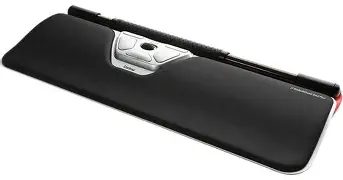
The Contour Rollermouse Red Wireless is an ergonomic, central pointing device that replaces a conventional mouse with a horizontally mounted rollerbar. Instead of reaching to the side for a mouse, users rest both hands on a cushioned wrist support and control the cursor by sliding a centrally mounted pad or bar left and right, with click and programmable buttons adjacent to the bar.
Contour’s rationale is straightforward: reduce the repetitive lateral reach and pronation associated with standard mice, which can contribute to shoulder and wrist strain over long daily use. The Red Wireless model targets people who want an ergonomic upgrade without being tethered to a PC, and who value ambidextrous central placement—particularly typists, programmers, writers, CAD users, and graphic designers who alternate heavy typing with precise pointing.
Real-world use cases:
- Writers and programmers who spend prolonged periods switching between keyboard and pointing device, and who want to keep both hands within the home row.
- People recovering from or aiming to prevent repetitive strain injuries (RSI), carpal tunnel symptoms, or shoulder tension caused by repetitive reaching.
- Designers and editors who need granular control and programmable buttons for common shortcuts, while minimizing wrist movement.
Beelink Mate Se Docking Station — What it is and why it exists
The Beelink Mate Se Docking Station is a connectivity hub designed to expand a laptop’s ports and video outputs. It aims to transform thin laptops—many of which sacrifice ports for thinness—into full desktop workstations capable of powering multiple external displays, wired networks, and a bank of USB peripherals while providing power delivery to the laptop itself.
Docking stations like the Mate Se are useful in hybrid work setups where users frequently move a laptop between home and office but want the convenience and productivity of a multi-monitor, wired-peripheral setup when docked. They also appeal to users who need additional ports for storage, cameras, or audio interfaces without constantly unplugging adapters.
Find top-rated Laptops & Computers products at great prices.
See Deals →Real-world use cases:
- Remote or hybrid workers who dock at a home office to gain a dual- or triple-monitor setup and wired Ethernet connectivity.
- Content creators who need to attach external drives, USB peripherals, and one or more external monitors while charging the host device through the dock.
- IT and office environments that want a single-cable solution for peripherals, network, and power when employees place laptops on a desk.
Pros & Cons
Contour Rollermouse Red Wireless
- Pros:
- Ergonomic central layout reduces lateral reach and promotes a neutral wrist position.
- Ambidextrous design is suitable for left- and right-handed users.
- Integrated programmable buttons speed up repetitive tasks for power users.
- Wireless convenience reduces cable clutter on the desk.
- Cons:
- Learning curve for users accustomed to traditional mice; precision and muscle memory take time to develop.
- Not a one-to-one replacement for all pointer workflows—dragging for long strokes or fine pixel-level control can feel different.
- Size and placement require desk space and a stable wrist-rest area; not ideal for very small desks or lap use.
Beelink Mate Se Docking Station
- Pros:
- Expands a laptop’s connectivity to include multiple displays, Ethernet, and additional USB ports.
- Single-cable docking streamlines daily transitions between mobile and desktop use.
- Works well for users who need a compact way to assemble a full workstation without extra adapters.
- Cons:
- Compatibility depends on the laptop’s USB-C implementation (USB-C Alt Mode, Thunderbolt, or DisplayLink). Users must confirm host support.
- Some configurations may require drivers (e.g., DisplayLink) for multiple monitor setups; that can add complexity.
- Potential heat and power limitations when driving multiple high-resolution displays and charging simultaneously.
At-a-Glance Comparison
| Feature | Contour Rollermouse Red Wireless | Beelink Mate Se Docking Station |
|---|---|---|
| Primary purpose | Ergonomic cursor control and reduced wrist/shoulder strain | Expand laptop connectivity and enable multi-monitor desktop setups |
| Target user | Typists, developers, creatives, people with RSI concerns | Hybrid workers, creators, professionals needing multiple displays and ports |
| Connectivity | Wireless (dongle/Bluetooth), rechargeable battery | USB-C upstream, multiple video outputs, Ethernet, USB-A ports, power delivery (varies) |
| Portability | Moderately portable but best used on a desk | Designed to stay on a desk; portable within office bag but bulky |
| Setup complexity | Low — plug and play, optional driver software for customization | Medium — depends on host capabilities and may need drivers for advanced setups |
| Real-world trade-offs | Requires adapting workflows and desk ergonomics for best results | Potential mismatch between dock capabilities and laptop’s USB-C implementation |
How They Perform in Real-World Scenarios
Everyday office work
For prolonged document editing, spreadsheet work, and frequent keyboard-to-pointer switching, the Rollermouse delivers clear ergonomic advantages. Users report fewer shoulder tugs and less reaching fatigue after switching to a central pointing device. The trade-off is time spent learning to use the roller bar efficiently—expect a few days to a few weeks of adaptation.
The docking station shines for office users who want a single-cable experience when landing at a desk. With a properly supported laptop, the Mate Se dock converts a laptop into a familiar multi-monitor setup with peripherals attached. The dock reduces repetitive cable swaps and provides a cleaner desktop aesthetic—helpful in shared home-office setups or hot-desk environments.
Content creation and design
Designers who rely on precise cursor control will want to try the Rollermouse before switching permanently. For many, the Rollermouse’s track precision and programmable buttons improve workflow for repetitive tool switching. However, for pixel-perfect tasks where muscle memory with a traditional mouse is critical, the transition may slow initial work.
For creators, a robust docking station is often more valuable. The ability to connect large external monitors, transfer files quickly to external drives via high-speed USB ports, and use a wired connection for reliable streaming or file uploads can be a big productivity win. That said, creators should check whether the dock supports the display resolutions and refresh rates their workflow requires.
Travel and hybrid-work lifestyles
The Rollermouse is somewhat portable and can be packed for travel, but its ergonomics are most beneficial when it remains on a stable desk rather than used on a cramped airplane tray. The Mate Se Dock, by design, is a desk-first device—useful in a home or office but not a convenient on-the-go accessory.
Buying Guide — What to Consider Before You Buy
For the Contour Rollermouse Red Wireless
- Ergonomic priorities: Identify whether the primary goal is to reduce shoulder reach, wrist pronation, or keyboard-to-pointer transit time. The Rollermouse is designed for those who primarily want to keep hands centered and reduce side-to-side motion.
- Workspace size: Ensure the desk has enough depth to accommodate the wrist rest and roller bar. A small lap setup will not allow the Rollermouse to perform as intended.
- Left- vs right-hand use: The device is ambidextrous, but users should test button layout to ensure comfort for their dominant hand.
- Compatibility and drivers: Confirm support for the user’s operating system if advanced button mapping is required. Basic pointing functions usually work out of the box.
- Trial period and return policy: Because adaptation time varies, a reasonable return window or trial is valuable. Many buyers decide within a few weeks whether the ergonomics are worth it.
For the Beelink Mate Se Docking Station
- Host laptop compatibility: Check whether the laptop supports USB-C Alt Mode or Thunderbolt for native multi-monitor output. If not, the dock may rely on driver-based solutions that add complexity.
- Video requirements: Determine the number of monitors, their resolutions, and refresh rates. Confirm the dock can support the intended display configuration without downscaling.
- Power delivery (PD): If the dock charges the laptop, ensure the PD wattage matches the laptop’s needs. Underpowered PD may slow or fail to charge under load.
- Network and peripheral needs: Verify Ethernet speed (Gigabit), the number and type of USB ports (USB-A 3.0 vs USB-A 2.0), and whether there’s an SD reader if required for photography workflows.
- Driver requirements and OS support: Some docks use DisplayLink technology for multi-monitor support; that can require drivers on Windows and macOS. Confirm driver availability for the chosen operating system.
- Heat and firmware updates: Docking stations can run warm when driving multiple peripherals. Check for firmware update paths and manufacturer support in case of issues.
Decision Framework — Which One Should You Buy?
These two devices solve fundamentally different problems. The right purchase depends on the primary pain point the buyer faces:
Discover deals on Laptops & Computers — updated daily.
See Deals →- If the dominant issue is physical discomfort—wrist pain, shoulder strain, or repetitive reaching—the Rollermouse addresses an ergonomic problem at the human-device interface. It changes how the user interacts with the computer.
- If the dominant issue is connectivity and productivity—lack of ports, desire for multiple external displays, or messy cable swapping—the docking station is the practical infrastructure upgrade that converts a portable laptop into a full workstation.
There are scenarios where both products make sense in the same setup: an ergonomically arranged desk with a Rollermouse for health, and a docking station to manage displays and peripherals. Budget, desk space, and how often the user moves between locations will weigh heavily in that decision.
Common Questions and Practical Tips
Will a docking station work with any laptop?
Not always. Work with the laptop’s documentation to confirm whether the USB-C port supports video output or whether Thunderbolt is required. When in doubt, check whether the dock vendor’s compatibility list includes the laptop model.
Is an ergonomic device like the Rollermouse a guaranteed fix for pain?
No. While many users experience reduced strain, outcomes vary with posture, desk setup, and individual physiology. The Rollermouse is most effective when combined with proper chair height, keyboard placement, and regular movement breaks.
How to test before buying?
- Try the Rollermouse at a local office-supply store or through a colleague to gauge how quickly muscle memory adapts.
- For docking stations, test the desired display configuration with the actual host laptop before committing. If that's not possible, confirm the vendor’s return policy and compatibility support.
Conclusion
The Contour Rollermouse Red Wireless and the Beelink Mate Se Docking Station cater to different but complementary aspects of a productive workstation. The Rollermouse is an investment in long-term comfort for anyone who spends hours typing and pointing—its ergonomic payoff becomes apparent over time but requires adaptation. The Mate Se Docking Station is a practical productivity tool that eliminates the friction of limited ports and supports more complex multi-monitor and peripheral setups—its success depends on host compatibility and power capabilities.
Buy the Rollermouse if reducing physical strain, improving ergonomics, and retaining hands near the keyboard are the priority. Buy the docking station if expanding connectivity, simplifying desk transitions, and building a multi-screen workstation are the priority. For many hybrid workers, the most productive solution is both: a comfortable pointing device plus a capable dock, each solving a different piece of the daily workflow puzzle.