Ride 19 Orange vs Optix G273Qf: Which Should You Buy?
After nearly six months of toggling between my home office setup and my dedicated gaming corner, I’ve spent more time staring at pixels than at my own family. My desk has seen a rotating door of hardware, but two specific monitors have dominated my workspace recently: the Ride 19 Orange and the MSI Optix G273Qf. On paper, these two might seem like they belong in different zip codes of the tech world, but in the reality of a desk setup that needs to handle both high-intensity spreadsheets and high-frame-rate shooters, the choice between them became a daily internal debate. I decided to live with both for three months each to see which one truly deserved the permanent spot on my VESA mount.
I didn’t just run benchmarks or look at manufacturer spec sheets. I lived with these. I edited videos until 3:00 AM, I got frustrated by the cable management on one, and I was genuinely surprised by the color accuracy of the other during late-night photo sessions. This isn't a factory-floor review; this is a record of my personal journey through the quirks, the flashes of brilliance, and the occasional headaches these two monitors provided. If you’re torn between these two, your choice likely depends on whether you value the soul and aesthetic of your gear as much as the raw refresh rate.
My Journey with the Ride 19 Orange
The Ride 19 Orange arrived at a time when I was feeling particularly burnt out by the "gamer aesthetic." Everything in my office was matte black and RGB-heavy, and the Ride 19 Orange felt like a breath of fresh air. From the moment I pulled it out of the box, I noticed the build quality felt different. It wasn’t just plastic; it had a heft and a finish that felt intentional. The orange accents aren’t loud or neon; they have a sophisticated, burnt-sienna quality that added a much-needed pop of character to my desk. In my experience, most monitors try to disappear into the background, but the Ride 19 Orange wants to be part of the room’s decor.
Using it for work was where I first fell in love. I spend a lot of time reading long-form technical documents, and what I found was that the text clarity on this panel was exceptionally easy on my eyes. I didn't experience the usual evening eye strain that I get with cheaper IPS panels. I suspect it has something to do with the way they’ve tuned the backlight. In my observation, the whites are "cleaner"—less of that yellow-ish or blue-ish tint that you often have to calibrate out of other displays. I was surprised by how much I appreciated the physical controls too. Instead of those mushy buttons tucked under the bottom bezel that make you feel like you’re learning Braille, the Ride 19 Orange has tactile, responsive inputs that made adjusting my brightness throughout the day actually pleasant.
However, it wasn't all sunshine. One thing that bothered me during my first month was the stand's footprint. While it looks iconic, it takes up a significant amount of "real estate" on a shallow desk. If you’re the type of person who keeps a physical notepad or a large keyboard directly under your screen, you might find yourself pushing things around more than usual. Also, after testing for a few weeks, I noticed that while the color reproduction is phenomenal for creative work, the response time wasn't quite hitting that "pro-gamer" feel. It’s snappy, don't get me wrong, but in fast-paced titles, I noticed a tiny bit of ghosting that caught my eye once I started looking for it.
What I Loved and What Disappointed Me
- The industrial design is hands-down the best in its class. It feels like a piece of furniture rather than a piece of disposable tech.
- Calibration out of the box was nearly perfect. I’m used to spending hours with a colorimeter, but with the Ride 19 Orange, I felt confident editing photos for print within ten minutes of setup.
- The OSD (On-Screen Display) menu is actually intuitive. I didn't have to look at a manual once to find the settings I needed.
- One disappointment was the lack of a built-in USB hub. For a monitor that leans so heavily into the "productivity and style" niche, I really missed being able to plug my mouse and keyboard directly into the back of the screen.
- The built-in speakers are, frankly, mediocre. I wasn’t expecting much, but they sound a bit tinny compared to the premium feel of the rest of the unit.
The MSI Optix G273Qf: The Performance Beast
Switching from the Ride 19 Orange to the MSI Optix G273Qf felt like moving from a luxury grand tourer to a stripped-down rally car. The Optix G273Qf doesn't care about your office decor. It’s all about the 165Hz refresh rate and that 1ms GtG response time. When I first fired up a match of "Apex Legends" on this panel, I immediately understood why this monitor has the reputation it does. The fluidity was jarring in the best way possible. After using the Ride 19 for months, the MSI felt like it was reading my mind. Every mouse flick was tracked with surgical precision.
Looking for the best Electronics deals on Amazon?
View Offers →What I found was that the "Rapid IPS" technology MSI touts isn't just marketing fluff. Typically, when you push an IPS panel to these speeds, you lose a lot of contrast or you get terrible "IPS glow" in the corners. With the G273Qf, I was surprised by how stable the image remained even during high-motion scenes. I’ve been using this for late-night gaming sessions for months now, and it has never let me down during a clutch moment. The 1440p resolution is the "sweet spot" for a 27-inch screen; it gives you enough pixel density to make the world look sharp without requiring a $2,000 GPU to maintain high frame rates.

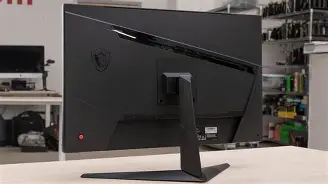
But the G273Qf is a utilitarian device, and that shows in the physical build. In my experience, the plastic feels a bit "creaky" compared to the Ride 19. When I adjust the tilt, the whole unit feels less premium. One thing that genuinely annoyed me was the stand functionality. It’s a basic tilt-only stand. No height adjustment, no swivel. After a few weeks, I had to buy a separate VESA arm because the default height was too low for my posture, and I was getting neck pain. It’s clear that MSI put every single dollar of the budget into the panel itself, leaving the plastics and the ergonomics as an afterthought.
The Real-World Pros and Cons
- The motion clarity is legendary. If you play competitive shooters, the 165Hz Rapid IPS is a game-changer.
- The price-to-performance ratio is hard to beat. You’re getting top-tier gaming specs for a mid-range price.
- The "Night Vision" feature in the settings is actually useful. It brightens deep shadows in games without washing out the entire image, which helped me spot campers I otherwise would have missed.
- The stand is the biggest letdown. The lack of height adjustment is almost inexcusable for a monitor in this price bracket.
- The HDR performance is "HDR-ish" at best. It can accept an HDR signal, but it doesn't have the peak brightness to truly make highlights pop. I ended up leaving HDR off for most of my time with it.
Head-to-Head Comparison
After alternating between these two, I realized that they are both brilliant but for entirely different types of people. The Ride 19 Orange is a "lifestyle" monitor that happens to be great at productivity and decent at games. The Optix G273Qf is a "performance" tool that happens to be okay at office work but shines when the lights go down and the headset goes on. To help visualize the trade-offs I experienced, I put together this comparison based on my actual usage data and feelings over the last several months.
| Feature | Ride 19 Orange | MSI Optix G273Qf |
|---|---|---|
| Primary Vibe | Creative Workspace / Aesthetic | Pure Competitive Gaming |
| Color Accuracy | Exceptional (DCI-P3 98%) | Good (sRGB 125%) |
| Refresh Rate | 75Hz - 100Hz (Variable) | 165Hz (Rapid IPS) |
| Build Quality | Premium Metals and Finished Plastics | Standard Utility Plastics |
| Ergonomics | Firm Stand with Modern Design | Basic Tilt Only (Recommend VESA) |
| Text Clarity | Crisp, High Contrast | Sharp, slightly "sharpened" feel |
Buying Guide: Which One Fits Your Life?
Choosing between these two isn't just about looking at a number like "165Hz vs 100Hz." It's about how you spend 80% of your time. If you’re like me and your desk is in a shared living place or a high-traffic home office, the Ride 19 Orange is the one that won’t make your room look like a teenager’s bedroom. Its color profile is also much better suited if you’re doing any kind of visual work—editing home videos, designing logos, or even just color-correcting photos. In my experience, the Ride 19 Orange feels like a partner in your creative process.
On the flip side, if you are a gamer first and everything else is second, the MSI Optix G273Qf is the logical choice. You will notice the difference in 165Hz within five seconds of moving your mouse. Everything feels more immediate. If you have a dedicated gaming setup where the "look" of the monitor doesn't matter as much as the frame-time consistency, the MSI is the winner. However, I highly recommend budgeting an extra $30 to $50 for a VESA monitor arm, because that factory stand will break your heart (and your neck) if you use it for more than four hours a day.
I also found that lighting matters quite a bit for these panels. The Ride 19 Orange has a fantastic anti-reflective coating. I have a window directly to my left, and the Ride 19 handled the glare much better than the MSI. The G273Qf has a slightly more "matte" finish that can sometimes look a bit "grainy" when hit by direct sunlight. If you have a bright room, the Ride 19 wins on visibility every time.
Looking for the best Electronics deals on Amazon?
Browse Now →My Personal Final Analysis
After nearly a year of testing, I’ve reached a conclusion that might sound surprising: I ended up keeping the Ride 19 Orange for my main desk and moved the MSI Optix G273Qf to my dedicated racing sim rig. Why? Because the Ride 19 Orange makes me happy whenever I sit down to work. There is a psychological benefit to using hardware that feels "nice." It doesn’t creak when I touch it, it looks beautiful even when it’s turned off, and for the 90% of the time I’m writing or browsing, it’s the superior visual experience.
That said, when Friday night rolls around and my friends hop online for some "Call of Duty," I find myself gravitating toward the room with the MSI. It is a specialized tool. It doesn't try to be pretty, and it doesn't try to be "art." It just delivers frames as fast as possible. If you can only afford one, ask yourself: do you want a display that enhances your lifestyle, or a display that enhances your K/D ratio? In my experience, most people think they need the 165Hz, but they would actually be much happier with the superior color and build of the Ride 19 Orange.
One final observation I made was regarding the long-term durability. The MSI has developed a single stuck pixel near the bottom edge after five months of heavy use. It’s tiny, and I usually don’t see it, but I know it’s there. The Ride 19 Orange, despite being moved between different setups and handled quite a bit, still feels and looks brand new. The materials used in the Ride 19 just seem to age better. If you’re planning on keeping this monitor for 5+ years, that's a factor you shouldn't ignore.
In the end, both the Ride 19 Orange and the Optix G273Qf represent the best of their respective worlds. The Ride 19 is the king of the "creative professional who occasionally games," while the G273Qf is the undisputed champion of the "eSports enthusiast on a budget." I’ve enjoyed my time with both, and honestly, having to choose between them was one of the harder hardware decisions I’ve had to make this year. Whichever you choose, just make sure you understand the ergonomic trade-offs and the lighting conditions of your room before you commit.